
Connected
One semantic system links data, models, people, and decisions without flattening their context.
AI-native enterprise planning
Plan Runner turns complex enterprise signals into connected models, governed scenarios, and operational decisions—inside a regional, cell-based architecture.
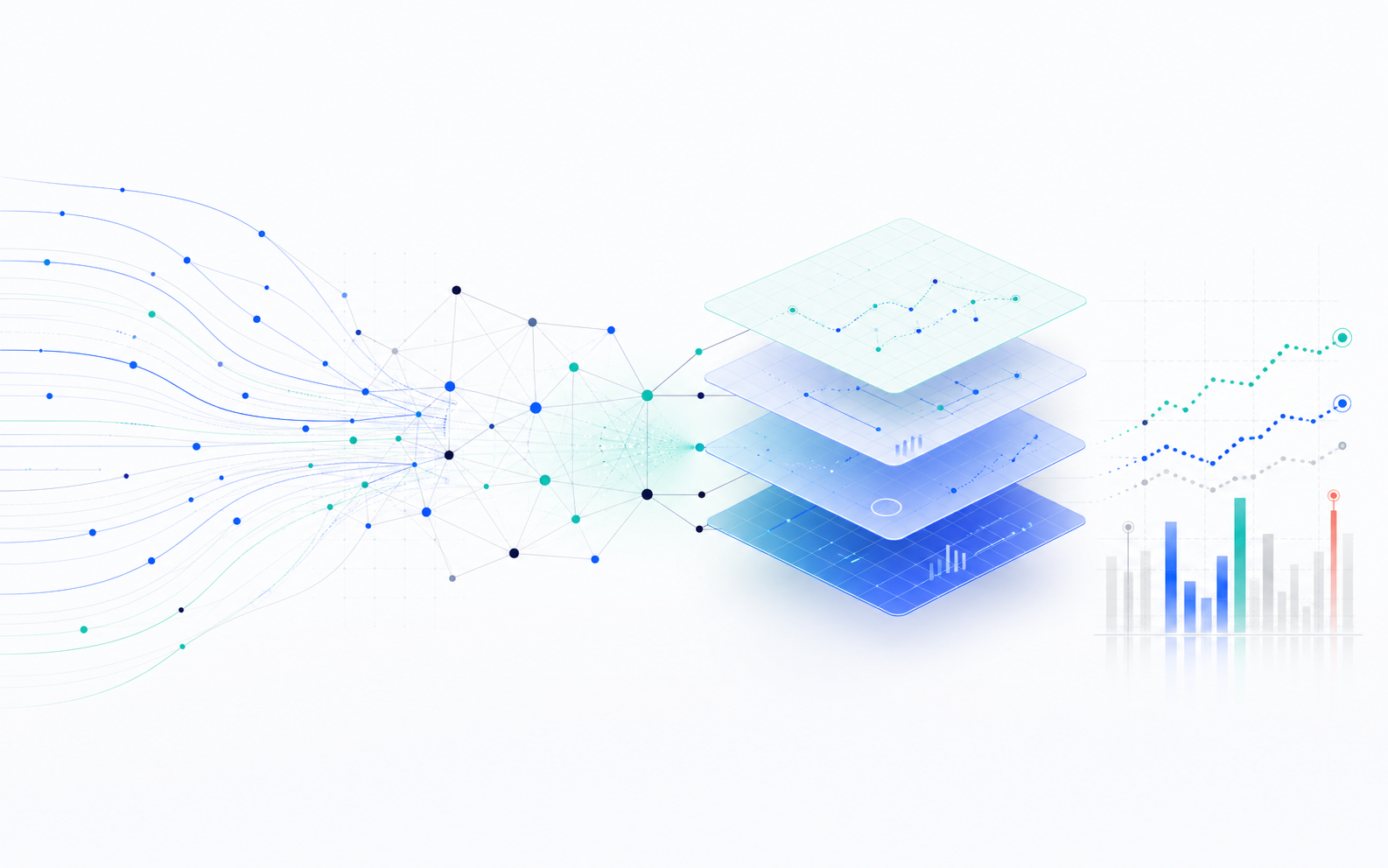
One semantic system links data, models, people, and decisions without flattening their context.
Scenarios, forecasts, and optimizations remain versioned, explainable, and comparable.
Regional cells, relationship permissions, immutable audit, and approval-gated automation.
Planning moves through tasks, approvals, writeback, and measurable outcomes—not static reports.
Designed from the system inward
Screens are consumers of governed capabilities. They do not define the domain, the service boundaries, or the deployment topology.
Open the full system mapMarketing, planning, modeling, administration, portals, and add-ins.
Versioned packages compose semantic models, views, workflows, roles, reports, forecasts, agents, tests, and migrations.
Bounded modules for modeling, data, workflow, reporting, security, governance, and intelligence.
Compiled formulas, block storage, dependency execution, scenarios, aggregation, and governed range writes.
PostgreSQL, event streaming, workflow orchestration, cache, object storage, Arrow, Parquet, and Iceberg.
Regional tenant cells
A minimal global directory places every customer into a regional cell. Planning data, calculation state, integration payloads, and AI context stay in that region.
Identity · tenant directory · placement · entitlements · package registry
Services · runtime · data · events · audit
Services · runtime · data · events · audit
Services · runtime · data · events · audit
Architecture briefing
We’ll map the systems, decisions, controls, and regional constraints into an executable platform path.